Buying guide
Beginner bondage: communication, setup and safety basics

The best beginner bondage setup is usually one simple item and one very clear conversation. Start with adjustable cuffs, a comfortable blindfold or a broad paddle—not all three at once—then agree on the plan, the stop signal and exactly how the item will come off.
Bondage can be playful, glamorous and pleasingly theatrical without becoming complicated. The skill is not tying the cleverest knot. It is creating an experience in which everyone knows what is happening, can change their mind and can be released immediately.
Have the conversation before opening the box
Consent is specific and ongoing. Agreeing to a blindfold is not agreement to cuffs, and cuffs are not agreement to impact. Consent must be knowing and freely given, and it can be withdrawn after play has started.
A useful pre-play conversation covers:
- what sounds fun, what is uncertain and what is off the table;
- which product and body area are involved;
- a word for slowing down and a word for stopping;
- a non-verbal stop signal if sight, speech or movement may be limited;
- who controls the key, release tab or clip;
- any health, mobility, sensation, skin or circulation concerns; and
- what check-in and support will feel good afterwards.
Keep it ordinary. “Is this still good?” is more useful than performing a script. A stop signal is not a challenge; stopping means the plan is working.
The mood can be dramatic. The agreement and release plan should be wonderfully boring.
Choose the first item by control, not costume
For a first setup, compare how easily a product can be fitted, checked and removed.
| Product | What it changes | What to inspect before buying |
|---|---|---|
| Adjustable cuffs | Limits hand or ankle movement | Usable circumference, lining, closure and release action |
| Blindfold | Limits sight and changes anticipation | Coverage, pressure, strap adjustment and instant removal |
| Broad paddle | Adds controlled impact sensation | Size, flexibility, surface, wrist loop and condition of the edges |
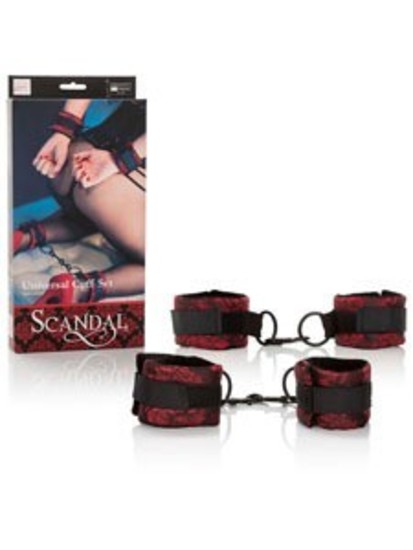
Soft hook-and-loop cuffs are often easier to size and release than rigid hardware. The Scandal Universal Cuff Set contains 4 plush-backed cuffs that adjust up to 35.5 cm, with hook-and-loop closures, swivel clasps and O-rings. Each cuff opens directly, with no tiny key to find at the crucial moment.
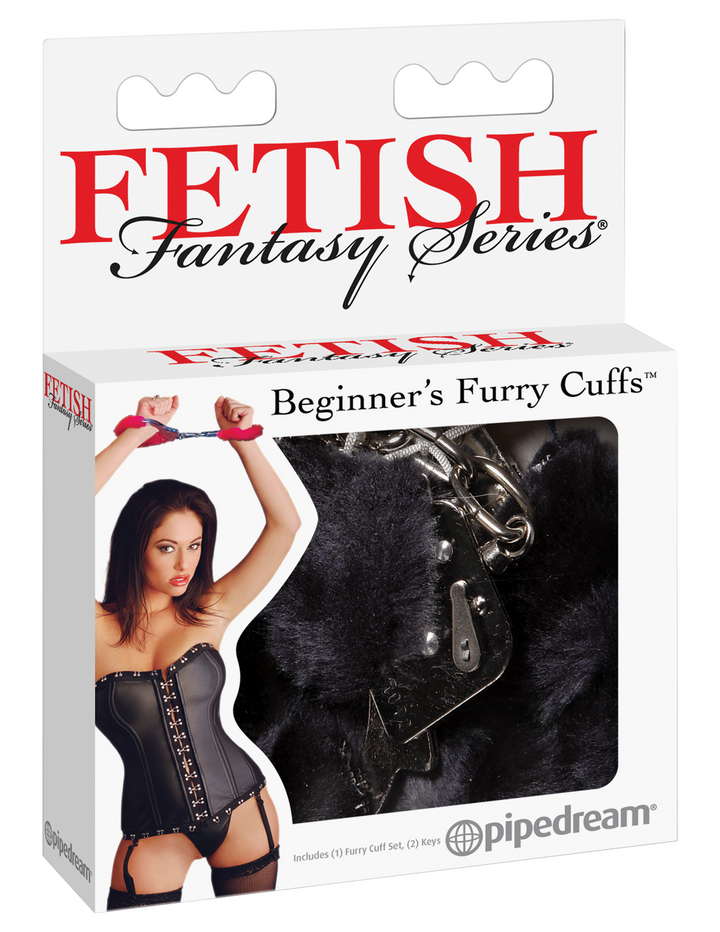
Metal cuffs feel and behave differently. The Fetish Fantasy Beginner’s Furry Cuffs have faux-fur lining and quick-release buttons as well as keys. The unlined Fetish Fantasy Beginner’s Metal Cuffs use the same quick-release idea. Their hard edges and smaller contact area make a careful fit and regular comfort checks especially important; beginner on the box does not decide the fit for you.


Test the release before anyone is restrained
Open and close every cuff, buckle, clip and hook while nobody is wearing it. Check that the person remaining unrestricted can reach the release from the planned position. Keep keys in hand, not across the room or inside a locked case.
Leave enough room for normal movement and recheck comfort, warmth, colour and sensation. Release immediately for pain, numbness, tingling, unusual coldness, marked colour change, panic, loss of communication or a request to stop. You do not need to wait for a dramatic safeword when an ordinary check-in says something is wrong.
Never arrange a scene in which everyone is restrained. Keep a phone, door and clear path out of the room accessible. Alcohol and drugs can impair consent, judgement and the ability to notice a problem; they do not make a tighter setup safer.
The Fetish Fantasy Cuff & Tether Set includes 4 adjustable cuffs, 4 tethers and a satin mask. It offers plenty of options, but your first use can be one pair of cuffs and one uncomplicated connection. The rest of the box will still be there next time.
A blindfold is a full experience on its own
Removing sight can make small sounds and touches feel more noticeable, which is precisely why a blindfold deserves its own plan. Choose one that blocks the amount of light you want without pressing painfully around the eyes or becoming difficult to remove.
The Blindfold in a Bag pairs a vegan-leather outer with velvet lining and an elastic band. The Amor Blindfold uses satin, soft foam padding and a double elastic band. Compare coverage, lining and strap pressure; one size does not guarantee the same fit on every head.
Agree on a non-verbal stop signal before the blindfold goes on. Keep speech unrestricted for a first sensory-play setup, and remove the blindfold before changing the activity or introducing something that was not discussed.


A paddle is not an invitation to skip the warm-up
Paddles vary by width, flexibility, material and surface. A broad, padded face spreads contact differently from a thin, firm edge. Compare the object itself rather than trusting words such as beginner, soft or punisher to define intensity for you.
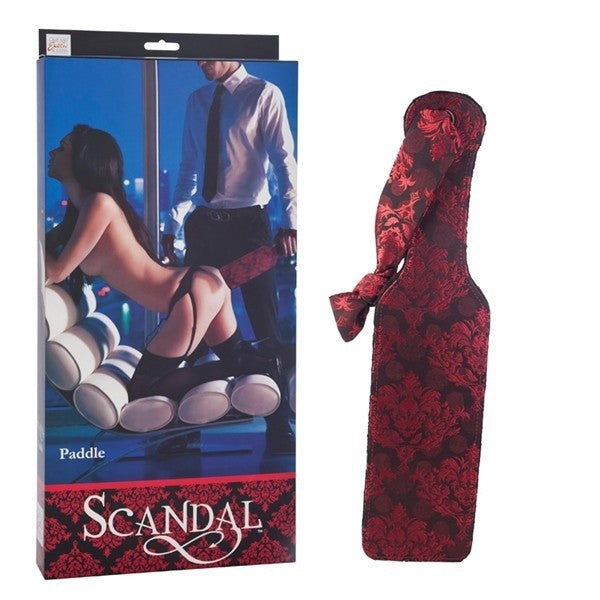
The Scandal Paddle is a 37.5 × 9 cm double-stitched polyester design, with plush on one side and designer fabric on the other. Two distinct surfaces, one gloriously theatrical accessory. Begin with light contact on well-padded areas, check in after every small change and keep impact away from the head, neck, spine, joints, kidneys, injured skin and any area with reduced sensation.
A wide face and playful packaging are not an invitation to swing harder. If either person wants more than light introductory impact, learn from a qualified in-person educator.

Keep the first setup simple
Keep the first setup to simple cuffs, blindfolds and paddles. Rope bondage, suspension, neck or breath restriction, gags, electrical play and load-bearing setups need different knowledge and equipment.
Never suspend a person from cuffs, tethers, furniture, doors or ceiling hardware unless every component is explicitly load-rated for that purpose and the setup is led by someone with appropriate practical training. A D-ring, carabiner or dramatic photograph is not proof of a safe working load.
Keep beginner restraints away from the neck and breathing. Do not improvise with cable ties, household cord or anything that tightens without a fast, predictable release. If rope interests you, begin with competent in-person instruction and leave suspension out of the first lesson.
Inspect, clean and store the equipment
Before use, inspect stitching, rivets, clips, edges, elastic, fabric and closures. Retire a product that is cracked, frayed, bent, sharp or no longer releases cleanly. Mixed-material products may need spot cleaning rather than soaking, so follow their care instructions.
Let equipment dry completely before storage. Keep keys and designated release tools with the set—but never locked inside it. Give everything another quick inspection next time; a flawless first outing does not make hardware immortal.
Your first-scene checklist
- One clearly agreed activity and product
- Clear, specific consent from everyone involved
- Verbal and non-verbal slow/stop signals
- Release action tested before fitting
- Key, tab or clip immediately reachable
- Fit checked again after movement begins
- Phone, door and an unrestricted person available
- No neck restraint, breath restriction or suspension
- Equipment inspected and care instructions read
- A check-in planned after everything comes off
Frequently asked questions
Are soft cuffs always safer than metal cuffs?
Not always. Broad, adjustable fabric cuffs can be easier to size and release, while metal cuffs need a careful fit and tested quick release. Either type comes off immediately if comfort, sensation, temperature or colour changes—or the wearer simply asks to stop.
Do I need a safeword if we already trust each other?
Trust is why the plan matters. Agree on simple words for slowing and stopping, plus a non-verbal signal when movement or sight is limited. Consent can be withdrawn at any time.
Can beginners use a blindfold and cuffs together?
Yes, but one new element at a time makes fit and communication easier to read. A blindfold on its own can already create a complete sensory-play experience.
Does this guide teach rope tying or suspension?
No. Rope placement and load-bearing suspension need practical instruction, suitable equipment and skills that cannot be learned from a shopping guide.
Continue shopping
Shop our warehouse sale online at 50% off retail, with same-day dispatch for eligible orders placed before 3 pm Sydney time, Monday to Saturday, free Standard shipping on eligible online orders of $150 or more after discounts, discreet billing and plain packaging. Or compare materials and release mechanisms in person at Alexandria or Rydalmere.